
Description
Chemical Composition
| Product Name | Zinc Borate | Formula | 2ZnO.3B2O3 |
| Product Model | ZB23 | Primary Product Use | Flame Retardant and Smoke Suppressant |
| Technical Index | Standard Value | ||
| Appearance | White Powder | ||
| Whiteness % | ≥90 | ||
| Zinc Oxide (ZnO) % | 44.0 ~ 46.0 | ||
| Boron Oxide B2O3 % | 54.0 ~ 56.0 | ||
| Loss On Ignition (450℃) % | ≤1.5 | ||
| Surface Water % | ≤0.5 | ||
| Particle Size D50 μm | 5.0 ~ 8.0 | ||
| Fineness (Residue on 200mesh Sieve) | ≤0.6 | ||
Packaging & Storage
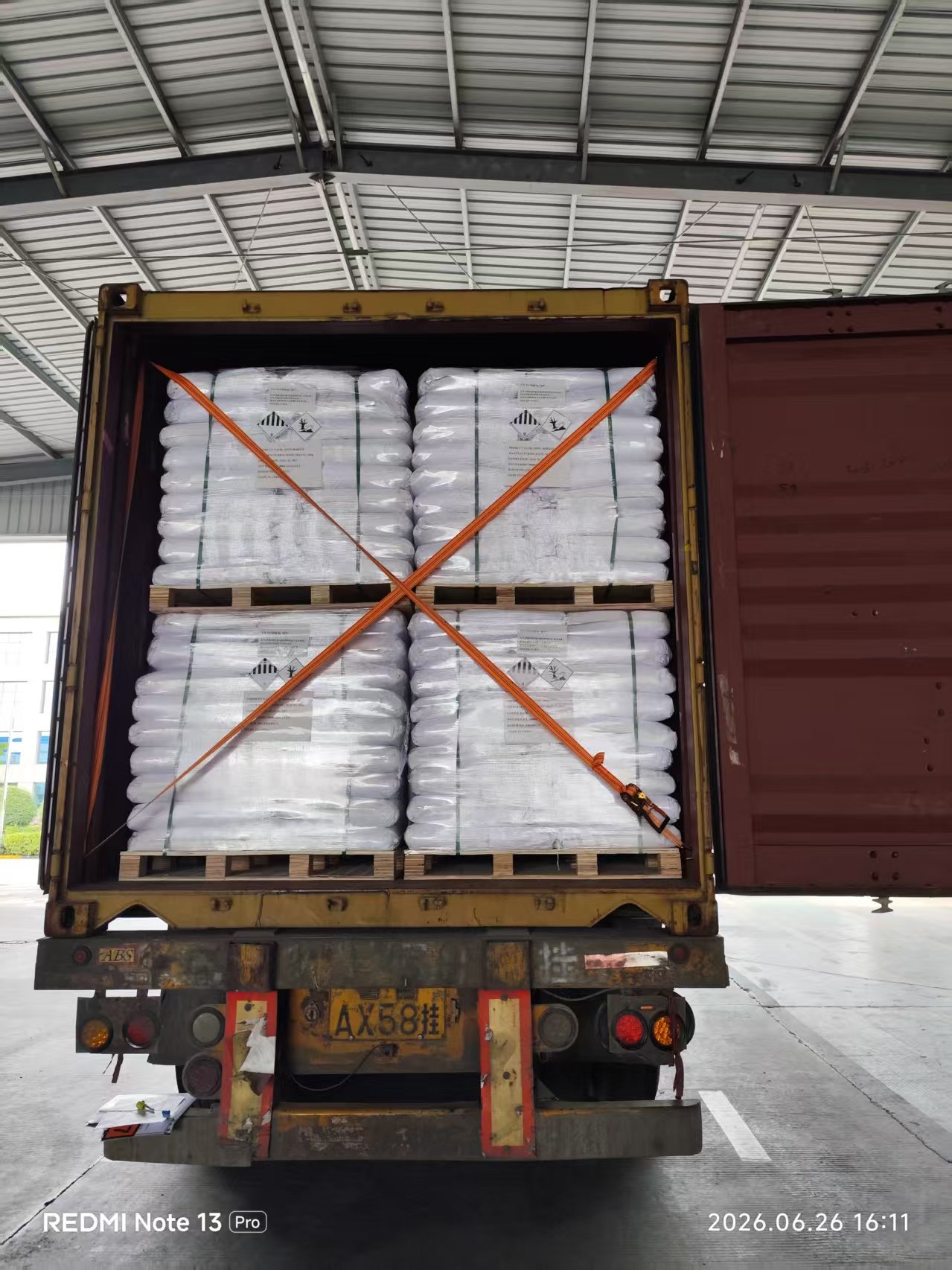
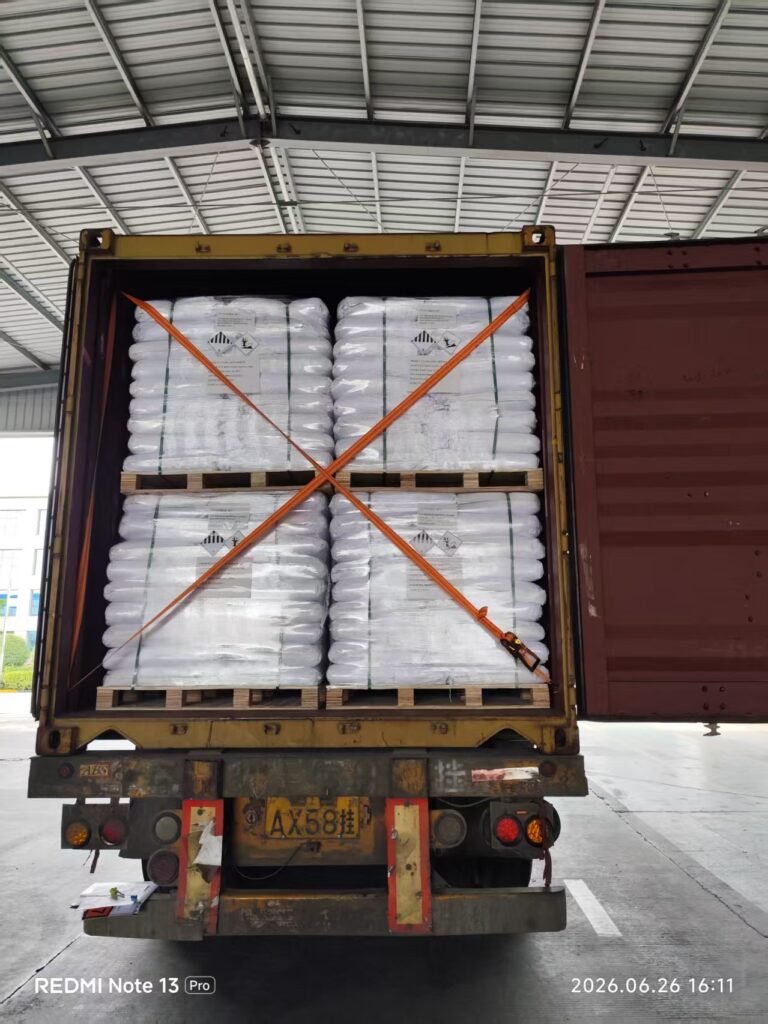
25 kg/Bag, Palletized, 18 MT/20’GP
The product should be stored under dry and clean conditions in its original package because of its tendency to gradually pick up surface moisture in high humidity environments. This surface moisture is easily removed by heating at about 200°C.
Export Loading Container Picture
Key Characteristics
- No Water Of Hydration:
Unlike hydrated forms, anhydrous zinc borate lacks water molecules, making it suitable for high-temperature applications.
- High Thermal Stability:
It remains stable up to temperatures of 600°c (1112°f)
- Environmentally Friendly:
It is a halogen-free flame retardant, providing a safer alternative to some traditional flame retardants.
Shipping Information
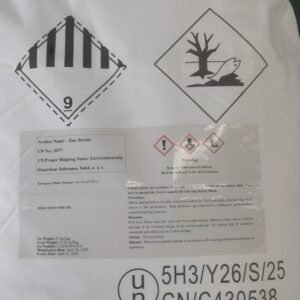
UN Number: 3077
UN Proper Shipping Name: Environmentally Hazardous Substance, Solid, N.O.S.
Transport Hazard Class(es): 9
Packing Group: III
Environmental Hazards: Marine Pollutant
Harmonized Tariff Number: 2840.20
Safety and Handling Information
For specific safety, toxicity and handling information, please refer to material safety data sheet on this product.
Chemical Registration Numbers
CAS NO.: 12767-90-7
EINECS NO.: 215-566-6
Recommend Application
Polymers: anhydrous zinc borate can be compounded with other additives to form halogen-free expansion flame retardant, which can be used as an excellent flame retardant and smoke suppressant for polymers requiring very high processing temperatures (polyether ketone, polysulfone, polyester, nylon, fluorine-containing polymers, etc.).
Ceramics: functions as an auxiliary flux in medium-temperature ceramic bodies, similar to talc.
Mechanism As Flame Retardant
Char Formation: catalyzes the formation of a protective char layer on the burning material.
Glass Formation: creates a glass matrix that shields the underlying material.
Synergistic Effects: works well with other flame retardants, including halogenated, non-halogenated, and Phosphorus-based compounds, to enhance performance.